Mental Health
Trauma Keeps Its Own Schedule
A reflection on the long shadow of trauma, the signals we sometimes miss, and the simple act of letting someone know they are seen.
 Ishan Shivanand5 min read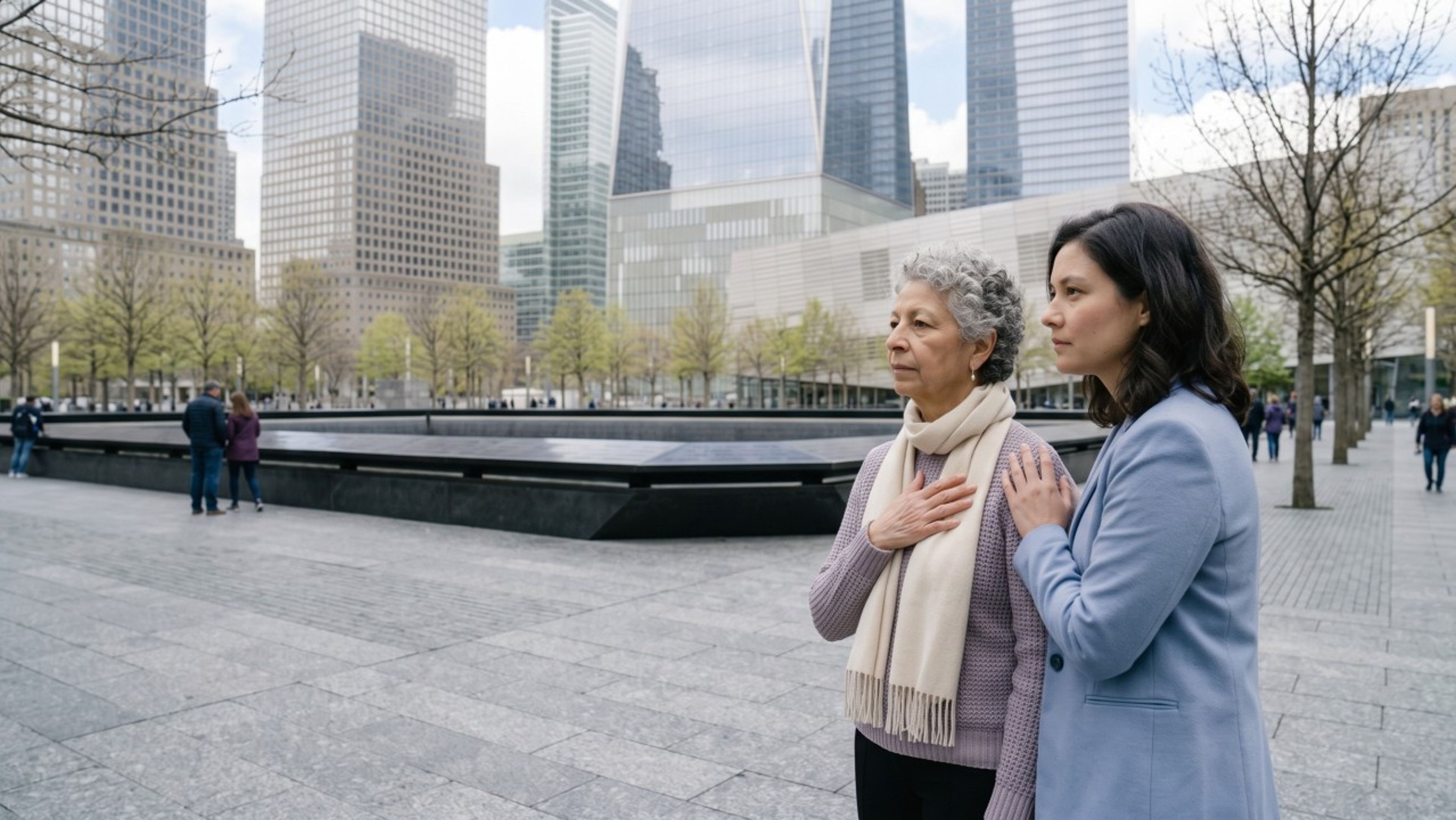
Today the names of the people we lost on 9/11 are read, and for many families this remains the hardest day of the year. I take a moment to be with them, and with the responders who are still becoming unwell, in body and in mind, a quarter of a century on.
I went through the figures of The World Trade Center (WTC) Health Program, which monitors and treats people affected by that day.
- An estimated 400,000 people were exposed to the collapse and its aftermath.
- As of spring 2026, the program had over 143,000 members enrolled.
- Nearly 15,000 responders and thousands of survivors have been certified with mental health conditions.
And twenty-five years later, the WTC Health Program is not winding down. It is still finding people who are suffering from trauma.
Aside of the program, researchers tracked over 12,800 responders across twenty years, gathering more than 81,000 assessments, in one of the largest and longest studies of Post Traumatic Stress Disorder (PTSD) ever conducted.
They observed that:
- Symptoms held steady at first, then rose, peaking more than 10 years after the day itself.
- For those diagnosed with PTSD, the median time before symptoms began improving was close to 9 years.
- Twenty years on, around 10% were still living with significant symptoms.
For ten years the responders' mental health condition was getting worse.
Asking someone how they are once, tells you very little. The day you ask may be years away from the day that the trauma actually surfaces. Trauma keeps its own schedule. Sometimes it is a year, sometimes it is five, and sometimes it is twenty-five.
We expect suffering to start when the bad thing happens and end soon after. A person is hurt, a person is helped, a person recovers. Twenty years of evidence tell us otherwise. What people carry can stay beneath the surface for most of an adult life and then become consequential.
I have spent my career with people at the moment of that consequence.
The damage is rarely caused by the severity of what they are carrying, but often by how long they carried it before anyone knew.
The WTC Health Program exists because people fought for it. Responders who had breathed the dust at Ground Zero spent years being told their illness had nothing to do with that day. The law that finally secured sustained care took almost a decade to pass. It carries the name of a responder who died before it existed.
That was illness you could see on a scan. A mind under strain offers nothing to point at. No scan, no scar, no test result. Which is why psychological harm is so often the last to be believed and the first to be doubted.
Recognition was slow even here, at the most documented event of its era, with the whole world watching. So if it took that long when everyone was looking, how long does it take when nobody is.
For most people suffering from poor mental health, there is no register and no one is searching for them. The signals surface slowly and in fragments. A colleague notices someone has gone quiet in meetings. A neighbour sees the car still in the drive at eleven in the morning. A friend registers that the replies have become shorter.
Each of these people holds a true but partial signal. None of them have enough information to be certain that their friend might be in need of help. And so they wait, reasonably, for someone better qualified to act.
Meanwhile the person in the middle of all this is often working hard to stay invisible. Fine, busy, nothing worth mentioning. And still, somewhere underneath, hoping that someone will see through the facade.
I have come to understand that succeeding at staying invisible is its own kind of loneliness, separate from whatever started it, and often heavier by the time someone finally speaks.
Observing change in behaviour is not a clinical skill. The people best positioned to see the early signals of mental ill health are almost never professionals. They are the ones we interact with regularly: the colleague, the neighbour, the cousin, the team mate at the football club.
People stay silent because asking feels like an intrusion. Ask, and you are suggesting your friend is not coping. Be wrong, and you have offended them and embarrassed yourself. So we wait for a stronger signal, which often never comes, or comes when it's too late.
Something as ordinary as "you've seemed a bit quiet lately, are you alright?" is better said clumsily than left unsaid. Remember, you are not making a diagnosis. You are simply saying what you noticed.
Twenty-five years of evidence tell us that trauma may not surface for a very long time. Which means the person you are worried about today may be many years away from the point where anyone would take their condition seriously. A conversation now will not fix it. But it can surface the problem sooner.
So if someone comes to mind as you read this, that instinct is worth trusting. You do not need to be right about what they may be experiencing. You only need to make it clear that they are not invisible.
To everyone carrying a name today: you are seen, and we are with you.
At a glance
A few thoughts to carry with you.
- Trauma does not follow a predictable timetable.
- Changes noticed by people close to us can open a conversation.
- Checking in is an act of connection, not a diagnosis.
The evidence behind the reflection
Sources & further reading
- WTC Health Program enrollment and certification data, CDC/NIOSH Quarterly Program Summarycdc.gov (opens a new tab)
- Mann FD et al., A 20-year longitudinal cohort study of post-traumatic stress disorder in World Trade Center responders, Nature Mental Health, May 2025nature.com (opens a new tab)
- Characteristics of survivors enrolled in the World Trade Center Health Program, Archives of Environmental & Occupational Health, 2024tandfonline.com (opens a new tab)
A little more context
Common questions
Why does this article say trauma keeps its own schedule?
Ishan Shivanand reflects on how distress may become apparent long after an event. He draws on long-term research involving World Trade Center responders to challenge the expectation that suffering always begins immediately and then steadily fades.
What changes might prompt someone to check in?
The article describes everyday changes such as becoming quieter in meetings or replying less fully to friends. These observations are a reason to ask how someone is doing, not evidence of a diagnosis.
How can I begin a conversation with someone I am concerned about?
The article suggests gently naming a change you have noticed and asking whether the person is alright. Its emphasis is on making someone feel seen, without assuming what they are experiencing or claiming a conversation will resolve it.
Which sources does the article reference?
The article references the CDC/NIOSH World Trade Center Health Program summary, a 2025 Nature Mental Health study of responders, and a 2024 study of survivors in Archives of Environmental & Occupational Health. Links to all three appear in the Sources section.
Did this reflection resonate?
Leave a little appreciation.
Written by